
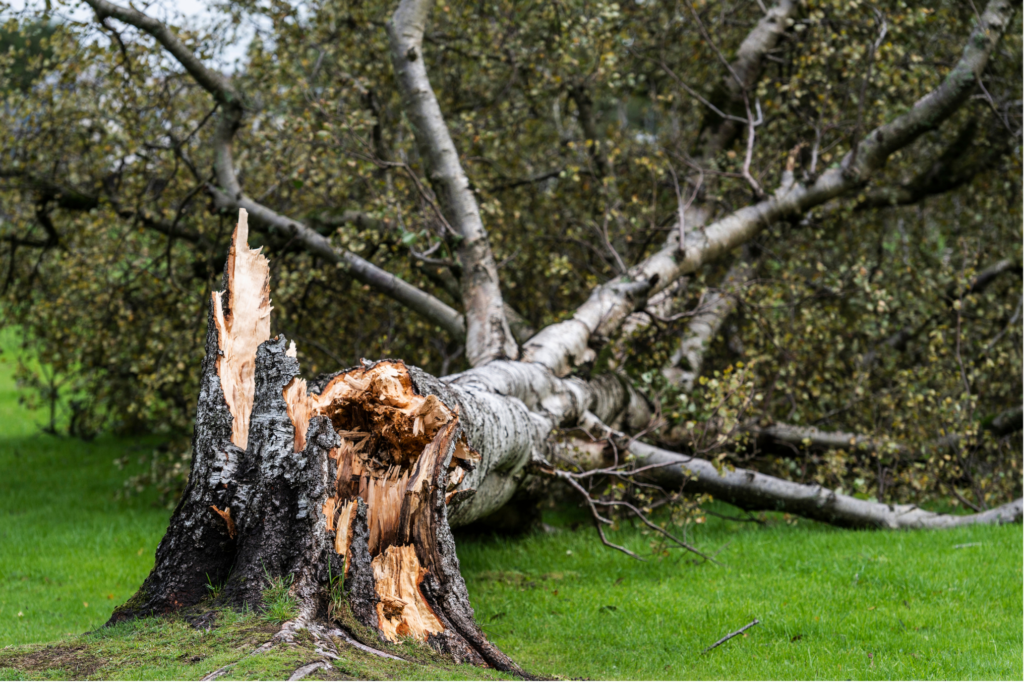
What to Do with a Storm-Damaged Tree
Wellington knows wind. When a strong northerly or a cold southerly storm comes through, fallen branches and damaged trees are common right across the region.
A storm-damaged tree can be dangerous even after the wind has dropped. Knowing what to do in the first few hours helps keep your family, your property and your neighbours safe.
1. Keep Everyone Clear
Stay away from the tree and anything underneath it. Damaged trees can shift or settle, and broken branches caught up in the canopy can fall without warning.
Keep children and pets inside, move cars if it’s safe to do so, and don’t walk or park under the tree until it’s been checked.
2. Look for Powerlines
If a tree or branch is touching or close to powerlines, assume the lines are live. Stay at least 10 metres away and keep others back.
Call 111 if there’s immediate danger. Otherwise, contact your local lines company. Work around powerlines must be carried out by the lines company or their approved contractors, so don’t try to move anything yourself.
3. Call for Help If Anyone Is at Risk
If a tree has fallen on a house, a car or a road and anyone could be hurt, call 111 first.
If a tree from a public reserve or street is blocking a road or footpath, contact your local council.
4. Record the Damage
Before anything is moved, take photos and video of the tree and any damage to your house, fences, cars or outbuildings. Note the date and time.
Contact your insurer early. Cover for fallen trees varies a lot between policies, and your insurer may want to see the damage or photos before clean-up begins. Keep receipts for any emergency work.
5. Don’t Try to Cut It Yourself
Storm-damaged trees are one of the most dangerous things to work on with a chainsaw. Fallen trunks and bent branches are often under heavy tension and can spring back violently when cut. Partly broken limbs can drop without warning.
Even if you’re confident with a chainsaw, leave storm damage to a qualified arborist.
What an Emergency Arborist Will Do
When our team arrives, the first priority is making the site safe. That usually means:
- Removing hanging or broken branches
- Cutting and clearing fallen trees from roofs, driveways and paths
- Assessing the rest of the tree for further risk
- Advising whether the tree can be kept with pruning or needs to come down
Once the site is safe, we can clear the debris and green waste, and remove the stump if the tree needs to go. Find out more about our emergency and risk services.
Is the Rest of the Tree Safe?
A tree that has lost a branch isn’t automatically unsafe, but it’s worth checking. Warning signs after a storm include:
- Cracks or splits in the trunk
- Soil cracked or lifted around the base
- A new lean
- Large limbs torn away, leaving jagged wounds
- Branches hanging in the canopy
Our guide to the signs a tree needs to be removed explains what to look for in more detail.
Reduce the Risk Before the Next Storm
Many storm failures can be prevented. Regular pruning to remove deadwood, reduce weight on long limbs and thin dense canopies lets wind move through a tree rather than catching it like a sail.
If you have large trees close to your house, driveway or boundary, a pre-winter check is well worth it. Our structural pruning service is designed to make trees stronger and safer over the long term.
Need Urgent Help?
Advanced Arb responds to storm-damaged and fallen trees across Wellington, Porirua, Lower Hutt, Upper Hutt and the Kāpiti Coast. We work with homeowners, landlords, property managers, businesses and insurers.
Contact our emergency tree team or get in touch to arrange a risk assessment before the next storm.